
Content
The grace The apostle Paul speaks about in Ephesians, is that the Jews are no longer under the law and are saved by faith, and the grace is that God has included the Gentiles into the beloved, whom are also saved by faith. I am new to this E2R but the little time I have been here, a lot have really changed in my entire way of my spiritual life. Amen thanks for this, there is so much information I can use when asked these exact questions about grace and religion.
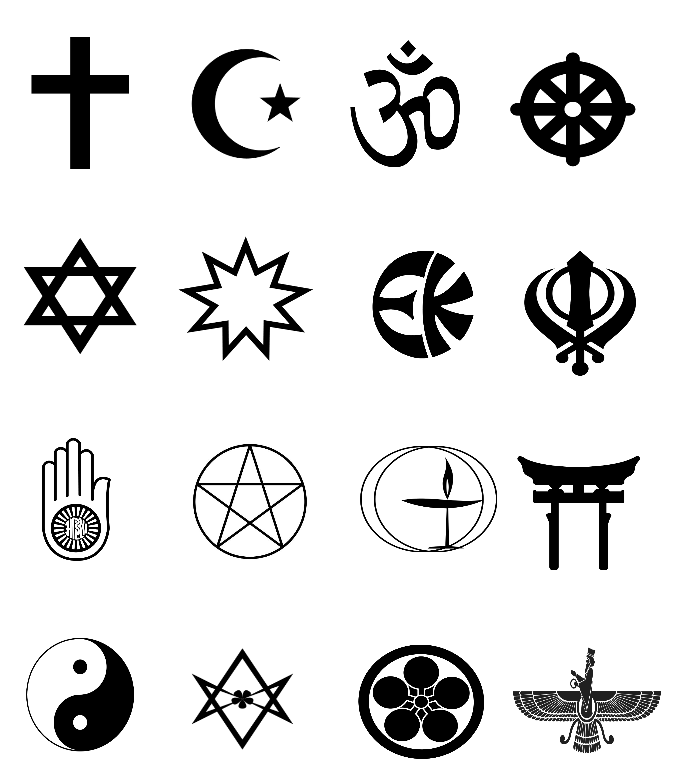
- My point is that my identity is not reducible to one thing, but to a consortium of many things.
- Nature maintains the balance between them and the unevolved masses by constant re-adjustment.
- At its best, it has generated at least tolerance and sometimes genuine acceptance and appreciation across ethnic and religious lines.
- They know what literary archetypes the religion was taken from in order to create the new doctrine.
- We can interpret weather patterns, send people into space, and predict future atmospheric, economic, planetary and biological disruptions and much much more.
- The first step will be to cast out primitive superstitions, to correct functional abuses, to democratize authority, and to get rid of hollow formalism.
- By keeping that ideal alive, we work to break down the walls that divide us.
Or they are the unhealthy symptoms of mental disorder. If one dares to look forward, a new religion will arise with the decay of the old; a new prophet will bring the fresh wind ida and pingala of divine inspiration to a dulled humanity. But both religion and its prophet must be new, fresh, vital. Too often have people been called upon by ecclesiastical organizations to repent their ways when it is the organizations themselves which should be called upon to do so. They should abandon false teachings, renounce worldly pomp, purify selfish motives, and return to genuine religion.
Sign Up For Our Religion Newsletter
I thought Buddhists were nice to each other; I didn’t think that they liked to kill people for religious reasons. A couple of weeks later, I must say in my daughter’s defense, she was in Sunday school again and they were talking about Moses. The story was Moses in the desert, no water, hits the rock with the stick, water comes out. I asked my girls, including my older daughter, about this story on the way back home and my younger daughter was great. She was able to tell all this Moses stuff, including the parting of the Red Sea and the basket, and she was pretty good.
Is Religion Good Or Bad For People?
Despite the best efforts of, say, the Humanist Community Project or Foundation Beyond Belief, stable communities organized around shared secular values and spiritual practices have yet to emerge. That means our labels are largely individual and sometimes experimental. We may try one on for size, live with it for a while, then try on something else. Atheist.The termatheistcan be defined literally as lacking a humanoid god concept, but historically it means one of two things.Positive atheismasserts that a personal supreme being does not exist.Negative atheismsimply asserts a lack of belief in such a deity. Devout believers use it as a slur and many assume an atheist has no moral core. Until recently calling oneself an atheist was an act of defiance.
The change in Americans’ religious beliefs coincides with the rising share of the U.S. public that is not affiliated with any religion. The unaffiliated not only make up a growing portion of the population, they also are growing increasingly secular, at least on some key measures of religious belief. For instance, fewer religious “nones” say religion is very important to them than was the case in 2007, and fewer say they believe in God or believe in heaven or hell. In this journal, the author talks about the ideology and the appeal about cults.
Everything is going around in cycles, because that’s the nature. People who share religious beliefs also usually share other characteristics including ethnic, cultural, and socioeconomic backgrounds. Any of these factors could explain the difference in life expectancy observed in these studies.
People do not want empty puerile words alone; they want new hope and new faith that their problems will be solved and life’s essential worth can be found. The strictest sense of positive atheism does not entail any specific beliefs outside of disbelief in any deity; as such, atheists can hold any number of spiritual beliefs. For the same reason, atheists can hold a wide variety of ethical beliefs, ranging from the moral universalism of humanism, which holds that a moral code should be applied consistently to all humans, to moral nihilism, which holds that morality is meaningless. Atheism is accepted as a valid philosophical position within some varieties of Hinduism, Jainism, and Buddhism. Philosophers such as Alain de Botton and Alexander Bard and Jan Söderqvist, have argued that atheists should reclaim useful components of religion in secular society. In antiquity, it had multiple uses as a pejorative term applied to those thought to reject the gods worshiped by the larger society, those who were forsaken by the gods, or those who had no commitment to belief in the gods.